
Working Mechanism of 20 Ton Overhead Crane Hoisting Systems
Overhead cranes are vital in modern industrial settings, particularly in factories, warehouses, steel plants, and shipyards. Among these, the 20-ton overhead crane is a popular choice for medium-heavy lifting applications, combining high load capacity with reliable operational precision. Central to the functionality of an overhead crane is its hoisting system, which directly influences lifting efficiency, safety, and operational control. Understanding the working mechanism of a 20-ton overhead crane hoisting system is essential for plant operators, engineers, and maintenance teams.
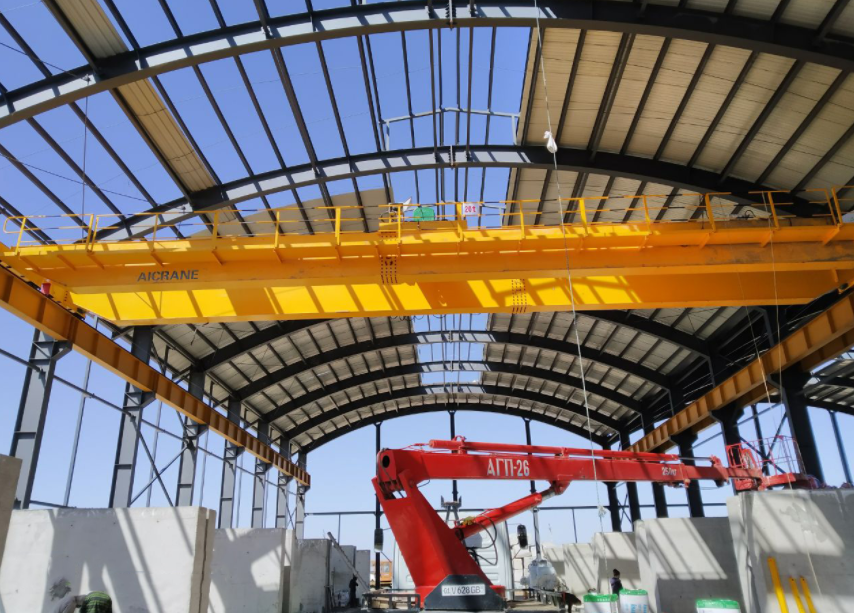
Components of a 20-Ton Overhead Crane Hoisting System
The hoisting system of a 20 ton overhead crane typically comprises several key components: the hoist, trolley, lifting medium (wire rope or chain), drum, motor(s), gearbox, brakes, and control system. Each component works in harmony to ensure smooth lifting, accurate positioning, and safe handling of heavy loads.
Hoist
The hoist is the core lifting component. It may be an electric wire rope hoist or a chain hoist, depending on the application. For a 20-ton crane, electric wire rope hoists are most commonly used due to their ability to handle heavy loads over long lifting heights with speed and precision. The hoist includes the lifting drum, motor, gear system, and braking mechanism.
Trolley
The trolley carries the hoist and allows horizontal movement along the crane bridge. It rides on wheels or rollers that run along the crane’s main girders, providing longitudinal motion control. The trolley ensures that the hoist can reach any position within the span of the crane, making it a crucial part of material handling operations.
Lifting Medium
The lifting medium, usually a high-strength wire rope, connects the hoist drum to the hook. In some applications, heavy-duty chains may be used. Wire ropes are preferred for 20-ton cranes due to their high tensile strength, flexibility, and durability. The rope is wound on the hoist drum in layers, ensuring smooth lifting and lowering.
Hoist Drum
The hoist drum stores and winds the lifting medium. When the drum rotates, the wire rope either winds up to lift the load or unwinds to lower it. The drum is designed to evenly distribute the wire rope layers, preventing tangling or slippage, which is crucial when handling 20-ton loads.
Motor and Gearbox
Electric motors provide the mechanical energy required for lifting, while the gearbox reduces the motor speed and increases torque to lift heavy loads safely. Most 20-ton overhead crane hoists use three-phase electric motors with variable frequency drives (VFD) for smooth acceleration and deceleration, improving load control and reducing mechanical stress.
Braking System
Brakes are essential for ensuring safety during lifting operations. The hoist brake prevents unintended lowering of the load if power is lost or in emergency situations. Most hoists feature an electromagnetic or mechanical fail-safe brake system designed to hold the load securely even under full capacity.
Control System
The crane hoisting system is controlled through either a pendant control, remote control, or a cabin-operated system. Modern 20-ton cranes often use programmable logic controllers (PLC) to manage motor operations, speed regulation, and safety interlocks, ensuring precision and reliability.
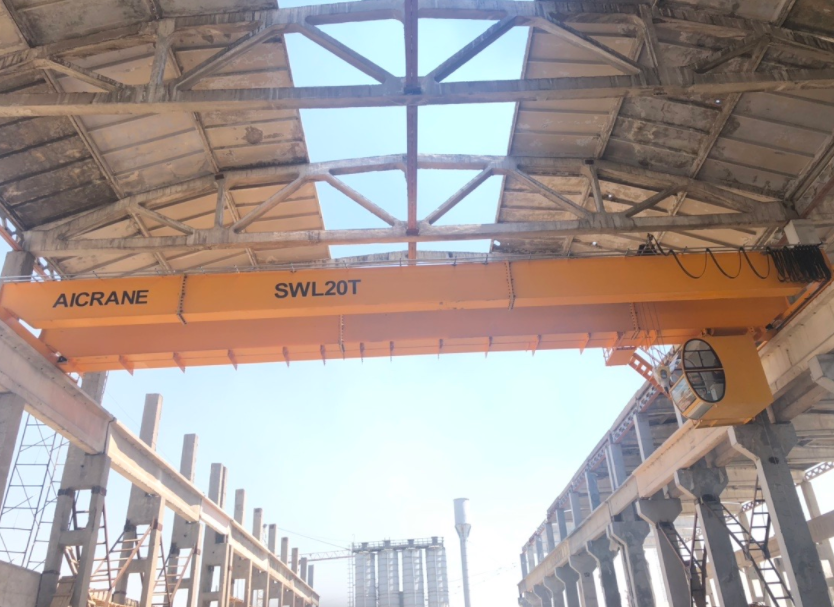
How the Hoisting System Works
The operation of a 20-ton overhead crane hoisting system is a coordinated process involving multiple mechanical and electrical components. The basic steps are as follows:
Initiating Lift
When the operator activates the hoist via a control system, electrical power is supplied to the hoist motor. The motor converts electrical energy into rotational motion, which is transmitted through the gearbox to the hoist drum.
Wire Rope Movement
As the hoist drum rotates, the wire rope winds onto or off the drum, raising or lowering the hook. The drum is engineered to wind the rope in even layers to prevent overlapping, which could compromise lifting safety.
Trolley Motion
Simultaneously, the trolley can move along the crane bridge, allowing the load to be positioned horizontally. The trolley movement is powered by a separate motor system and synchronized with the hoist to enable precise load placement.
Load Stabilization
Lifting a heavy 20-ton load generates dynamic forces that can cause swing. To minimize this, many hoisting systems are equipped with anti-sway mechanisms or inverter-controlled motors that allow smooth starting and stopping, reducing load oscillation and enhancing operator safety.
Safety Interlocks
During operation, safety systems continuously monitor load weight, motor current, and crane position. Overload protection ensures that lifting beyond 20 tons is automatically prevented, protecting both the equipment and personnel. Limit switches stop the hook at the maximum and minimum lifting heights to prevent mechanical damage.
Load Lowering
When lowering the load, the process is essentially reversed. The drum unwinds the wire rope in a controlled manner, with the braking system regulating the descent speed. Smooth lowering is essential to prevent sudden shocks on the load or crane structure, which could lead to equipment wear or accidents.
Additional Considerations in Hoisting System Design
Capacity Matching
Every component of a 20 ton eot crane, from the wire rope to the motor, must be designed to handle the rated load safely. Overdesign is common for additional safety margins, ensuring that the crane performs reliably under peak conditions.
Maintenance and Inspection
Hoisting systems require regular maintenance, including lubrication of gears, inspection of wire ropes for wear or fraying, brake testing, and motor performance checks. Proper maintenance ensures longevity and operational safety.
Speed Control
Modern hoists allow adjustable lifting speeds, enabling operators to handle delicate or bulky loads without damage. Dual-speed hoists may offer high-speed operation for empty hooks and slow, precise movement under load.
Energy Efficiency
Variable frequency drives and regenerative braking systems in modern hoists improve energy efficiency by recovering kinetic energy during lowering, reducing operational costs for continuous heavy-duty operations.
Integration with Automation
In automated or semi-automated plants, hoisting systems can be integrated with PLCs and sensors to enable precise load positioning, automatic sequencing, and synchronized operations with other cranes or conveyor systems.
Conclusion
The hoisting system is the heart of a 20-ton overhead crane, combining mechanical strength, electrical control, and safety features to enable efficient and reliable lifting operations. From the wire rope and hoist drum to motors, gearboxes, and brakes, each component is engineered to work seamlessly under high loads. Modern hoisting systems incorporate advanced technologies such as anti-sway control, variable frequency drives, and PLC integration to improve safety, precision, and efficiency.
For industrial operators, understanding the working mechanism of the hoisting system is critical not only for safe operation but also for maximizing the lifespan of the crane. Regular maintenance, proper load handling, and adherence to operational guidelines ensure that a 20-ton overhead crane can serve as a reliable workhorse in any manufacturing or material-handling environment. Whether for lifting steel coils, heavy machinery, or industrial components, the 20-ton crane hoisting system remains an indispensable element of modern industrial productivity.