
Remote Operation and Wireless Control Technologies for 50 Ton Overhead Cranes
Overhead cranes are the backbone of heavy industrial operations, enabling safe and efficient lifting of large loads in factories, warehouses, and construction sites. Among them, 50-ton overhead cranes are widely utilized in steel mills, shipyards, heavy machinery production plants, and other industries requiring high-capacity material handling. As the demand for enhanced safety, operational efficiency, and precision grows, remote operation and wireless control technologies have emerged as essential solutions in modern crane systems.
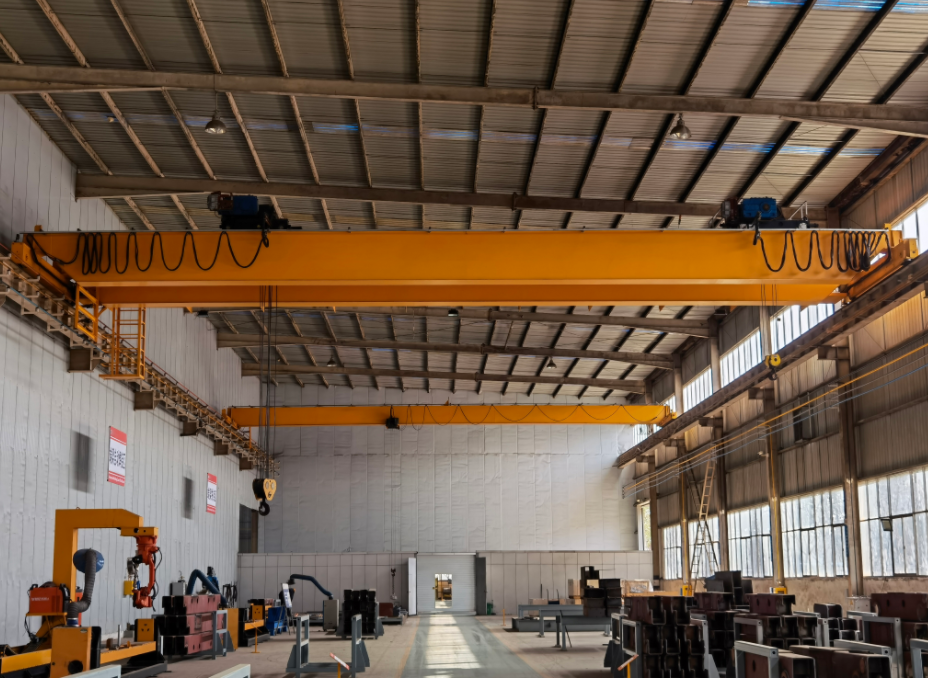
The Importance of Remote Operation in Heavy Duty Cranes
Operating a 50 ton overhead crane involves managing significant weight and inertia, which introduces risks related to both the operator’s safety and the protection of the facility’s infrastructure. Traditional crane operation requires the operator to either sit in a cab attached to the crane or use wired pendant controls from the ground. While these methods are reliable, they have limitations:
- Restricted visibility: Operators may face blind spots when handling oversized or irregularly shaped loads.
- Safety risks: Being physically close to heavy lifting operations exposes operators to potential accidents.
- Limited flexibility: Fixed cab or tethered controls restrict operator mobility and responsiveness.
Remote operation addresses these challenges by allowing the operator to control the crane from a safe distance, either from a designated control room or from anywhere on the worksite using wireless technologies. This approach enhances safety, reduces human error, and improves overall operational efficiency.
Wireless Control Technologies: Components and Functionality
Wireless control technologies for 50-ton overhead cranes have advanced significantly, offering precise, real-time control of lifting operations. These systems typically include the following components:
- Remote Control Transmitter:
The handheld device or wearable controller used by the operator to issue commands. Modern transmitters are ergonomically designed and equipped with intuitive joysticks, buttons, and safety interlocks. They often include displays to provide feedback on crane status, load weight, and position. - Receiver Unit:
Installed on the crane, the receiver interprets signals from the remote transmitter and converts them into operational commands for the crane’s drive and lifting systems. The receiver ensures signal integrity and prioritizes safety features, such as automatic load limiting and emergency stop functions. - Communication Protocols:
Most wireless crane control systems operate on secure radio frequencies (RF), commonly 2.4 GHz or 5.8 GHz, offering long-range operation with minimal interference. Advanced systems also employ frequency hopping and encryption to prevent signal loss, hacking, or accidental interference from nearby equipment. - Sensors and Feedback Systems:
To ensure precision, modern remote-controlled cranes integrate sensors such as load cells, motion detectors, angle sensors, and encoders. These sensors provide real-time data to the operator, helping avoid collisions, swing, and overloading, which are critical when lifting heavy loads like 50 tons. - Integration with Safety Systems:
Wireless control systems are often linked with other safety mechanisms, including anti-collision sensors, overload protection, emergency braking systems, and warning alarms. This integration ensures that even in the case of operator error or system malfunction, the crane can halt operations safely.
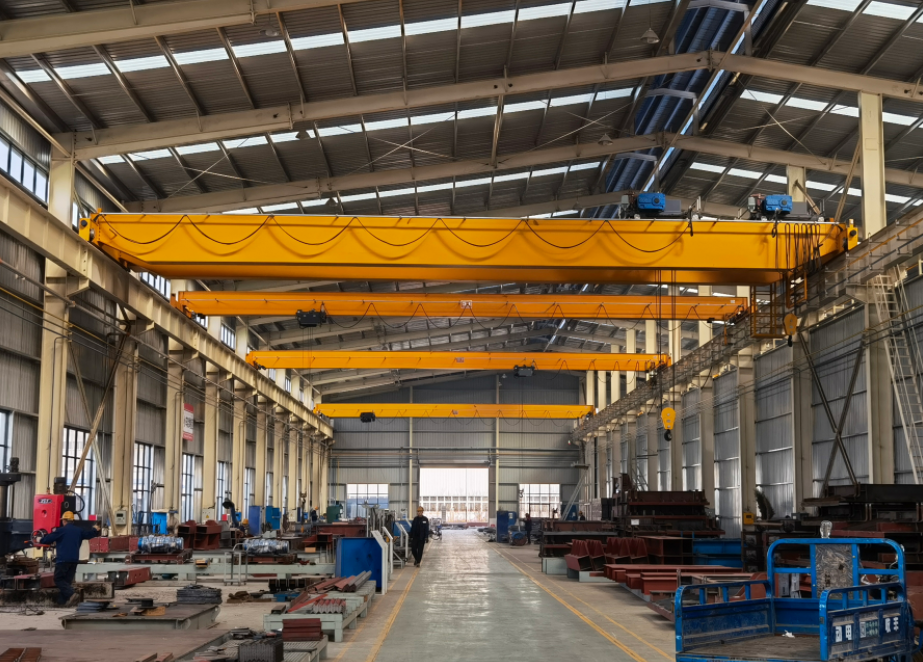
Advantages of Remote Operation and Wireless Control
The adoption of wireless control technologies in 50-ton overhead cranes offers numerous benefits for industrial operators:
1. Enhanced Operator Safety
The most immediate advantage is safety. Operators can control the crane from a secure distance, eliminating exposure to moving loads, suspended objects, or potential structural hazards. In hazardous environments, such as steel mills or chemical plants, this distance can be a lifesaving feature.
2. Improved Operational Flexibility
Wireless control allows operators to position themselves where visibility is optimal, giving a clear line of sight to both the load and the destination. This flexibility is particularly valuable when handling oversized or awkward loads that obstruct standard cab views.
3. Increased Efficiency and Productivity
Remote operation reduces the need for multiple operators or signalers. Operators can quickly maneuver loads, coordinate multiple cranes, and make adjustments in real-time without waiting for additional personnel. The combination of precision controls and feedback systems minimizes errors and reduces cycle times for lifting and transport tasks.
4. Reduced Training and Operator Fatigue
Ergonomic remote controllers with intuitive interfaces make it easier for new operators to learn crane operations. Wireless systems also reduce physical strain, as operators are not confined to a cab or tethered control station. This reduction in fatigue contributes to safer and more consistent crane performance.
5. Integration with Automation
Wireless control technologies are often the first step toward semi-automated or fully automated crane operations. Data collected from sensors and feedback systems can be used to implement automated positioning, load balancing, or coordinated multi-crane lifting tasks. This integration helps future-proof industrial operations.
Key Considerations for Implementing Wireless Control in 50-Ton Cranes
While the benefits of wireless remote control overhead crane operation are clear, careful planning is essential to ensure safe and reliable deployment. Key factors include:
Signal Range and Interference
The operating range of the wireless system must cover the full working area of the crane. Industrial environments often contain metal structures, electrical equipment, and other RF-emitting devices that can cause interference. Choosing a system with robust frequency management and interference-resistant technology is crucial.
Safety Redundancy
For heavy loads, redundancy is critical. Many wireless systems include dual receivers, emergency stop buttons on both the crane and the controller, and fail-safe mechanisms to halt operations if communication is lost.
Compatibility with Existing Systems
Integrating wireless controls with existing crane mechanisms, drive systems, and safety features can be complex. Customization may be required to ensure that the crane responds accurately to remote commands and maintains compliance with industrial safety standards.
Regulatory Compliance
Industrial wireless equipment must comply with local regulations regarding RF transmission, electromagnetic interference, and occupational safety. Ensuring compliance helps prevent legal or operational issues and guarantees safe deployment in industrial environments.
Real-World Applications
Wireless remote operation has transformed operations in multiple industries that rely on 50-ton cranes:
- Steel Manufacturing: Operators can manage molten metal ladles or heavy steel coils from a safe distance, reducing the risk of accidents.
- Shipbuilding: Large hull components can be lifted and precisely positioned without requiring operators to work near hazardous edges or heights.
- Construction and Precast Production: Remote control allows seamless handling of concrete panels, structural beams, and other heavy elements with improved speed and accuracy.
- Maintenance and Logistics: Cranes can transport large machinery or industrial components across sites, coordinated from a central control room, reducing manpower and optimizing workflow.
Future Trends in Wireless Crane Control
The evolution of wireless crane technology continues with innovations in automation, AI, and IoT integration. Key trends include:
- Digital Twin Integration: Simulating crane operations in a virtual environment helps optimize paths, predict collisions, and enhance operational planning.
- Predictive Maintenance: Wireless sensors can continuously monitor crane health, predicting failures before they occur and scheduling maintenance proactively.
- Advanced Automation: Combining remote operation with semi-autonomous or fully autonomous functions will enable cranes to perform repetitive tasks with minimal human intervention.
- Enhanced Human-Machine Interface (HMI): Next-generation controllers feature augmented reality displays, haptic feedback, and AI-assisted guidance for safer and more precise crane operation.
Conclusion
The integration of remote operation and wireless control technologies represents a significant advancement in the functionality and safety of 50-ton overhead cranes. By enabling operators to work safely at a distance, improving precision, and enhancing productivity, these technologies are redefining material handling in heavy industrial environments.
As industrial demands continue to evolve, adopting wireless control systems ensures not only compliance with modern safety standards but also positions companies at the forefront of operational efficiency. For businesses handling large loads, investing in robust remote operation technology is no longer just an option—it is a critical step toward safer, smarter, and more productive crane operations.