
Foundation Requirements for Heavy Duty Gantry Crane Installation
Heavy duty gantry cranes are essential equipment in industries such as shipbuilding, steel production, power plants, ports, and large-scale manufacturing. These cranes are designed to handle extremely heavy loads, often exceeding 500 tons, and must operate with precision and safety. While selecting the appropriate crane model and lifting capacity is crucial, equally important is the design and preparation of the foundation on which the crane will operate. An improperly designed foundation can lead to structural failure, crane instability, excessive vibrations, or even catastrophic accidents. This article explores the critical considerations, requirements, and best practices for heavy duty gantry crane foundation installation.
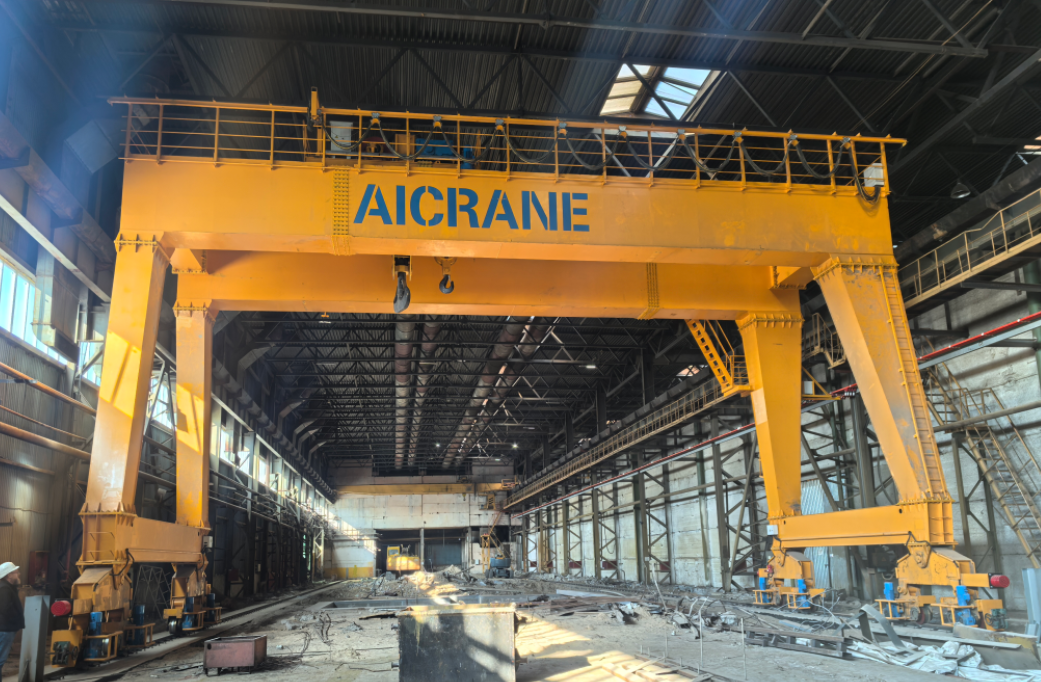
1. Importance of a Solid Foundation
The foundation serves as the primary support for the crane and its load. Unlike smaller cranes or mobile cranes that operate on temporary or lightly reinforced surfaces, heavy duty gantry cranes exert enormous loads on the supporting ground. These loads are not only vertical but also horizontal due to crane acceleration, deceleration, and side sway during operations. A solid, well-engineered foundation ensures:
- Load-bearing capacity: Supports the weight of the crane, trolley, and maximum rated load without settlement.
- Structural stability: Prevents tilting, uneven stress distribution, or vibrations that can affect crane operation.
- Operational accuracy: Maintains alignment of rails and tracks to prevent derailment or skewing.
- Safety: Reduces risk of accidents caused by foundation failure, including collapse under heavy loads.
Without a properly designed foundation, even a high-quality crane can face operational limitations, reduced lifespan, and increased maintenance costs.
2. Types of Foundations for Heavy Duty Gantry Cranes
The choice of foundation depends on the type of gantry crane, site conditions, soil characteristics, and load requirements. The main types include:
a) Concrete Foundations
Concrete foundations are the most common for heavy duty gantry cranes. They provide a rigid, high-strength base and can be reinforced to handle high bending and shear forces. Key features include:
- Reinforced concrete blocks: Large crane foundations typically use reinforced concrete blocks beneath each crane leg. Steel reinforcement helps manage tension and prevent cracking.
- Continuous rails slab: For cranes with rail-mounted wheels, a continuous concrete slab ensures even load distribution and proper track alignment.
- Embedded anchor bolts: Crucial for securing crane rails, anchor bolts must be accurately positioned and deeply embedded in concrete to withstand operational forces.
b) Pile Foundations
For sites with soft or unstable soil, a pile foundation may be required. Piles transfer the crane load to deeper, more stable soil layers or bedrock. Pile foundations are often used in:
- Ports and waterfront facilities with loose sediment.
- Industrial plants built on reclaimed land.
- Areas with high water tables where shallow foundations are insufficient.
Pile type (concrete, steel, or composite) and pile spacing depend on crane load, soil bearing capacity, and geotechnical studies.
c) Pad Foundations
Pad foundations are isolated square or rectangular concrete pads under each crane leg. They are suitable for moderate loads and firm soil conditions. Each pad must be carefully designed for bearing capacity and reinforced to resist bending moments from crane operations.

3. Foundation Design Considerations
Designing a foundation for a heavy duty gantry crane involves multiple technical considerations. Engineers must account for vertical loads, horizontal forces, dynamic effects, soil conditions, and environmental factors.
a) Load Calculations
The foundation must support:
- Crane dead weight: The weight of the crane structure itself.
- Maximum lifting load: Including trolley, hoist, and payload.
- Dynamic forces: Generated during acceleration, deceleration, sudden stops, and load swinging.
- Environmental loads: Wind, seismic activity, and potential snow or ice loads in some regions.
A safety factor, typically between 1.5 and 2, is applied to account for unexpected load variations and long-term effects.
b) Soil Bearing Capacity
Before designing the foundation, a geotechnical survey should assess soil bearing capacity, settlement potential, and subsurface conditions. Poor soil conditions may require:
- Soil improvement techniques, such as compaction or stabilization.
- Pile foundations to transfer loads to deeper soil layers.
- Larger or thicker concrete footings to reduce stress per unit area.
c) Crane Track Alignment
For rail mounted gantry cranes, precise rail alignment is critical. Even slight deviations can cause wheel derailment or uneven load distribution. Key factors include:
- Leveling: Foundation must maintain flatness along the rail path, typically within 1–2 mm per meter.
- Parallelism: Rails should be parallel within tolerance to avoid skewing.
- Expansion allowances: Concrete may expand or contract due to temperature changes, which should be accounted for during installation.
d) Foundation Thickness and Reinforcement
Foundation thickness and reinforcement are determined by load calculations, crane span, and soil characteristics. Heavier cranes or longer spans generally require thicker slabs and denser reinforcement. Reinforcement placement must ensure:
- Bending resistance for vertical loads.
- Shear strength at critical points, particularly near crane leg supports.
- Crack control to prevent long-term structural issues.
e) Drainage and Environmental Protection
Water accumulation around crane foundations can cause soil softening, foundation settlement, or concrete degradation. Proper drainage measures include:
- Sloping the foundation slightly away from crane legs.
- Installing drainage channels or sumps around the foundation.
- Applying protective coatings or waterproofing on concrete surfaces in wet environments.
4. Installation and Construction Requirements
Proper foundation construction is as critical as design. Key steps include:
a) Excavation and Ground Preparation
- Clear the site of debris, vegetation, or loose soil.
- Excavate to the required depth for pad, slab, or pile foundation.
- Compact the subgrade to achieve uniform support and prevent future settlement.
b) Formwork and Reinforcement Installation
- Construct formwork to hold concrete in place.
- Place steel reinforcement according to design specifications.
- Ensure anchor bolts and embedded components are positioned with high precision.
c) Concrete Pouring and Curing
- Use high-strength concrete suitable for industrial loads (typically C35 or higher).
- Pour concrete in layers to avoid voids and ensure full compaction.
- Allow sufficient curing time (usually 28 days for full strength) before installing the crane rails or equipment.
d) Rail and Crane Leg Alignment
- Install crane rails accurately using laser leveling and measurement tools.
- Check alignment continuously during installation to avoid post-construction adjustments.
- Apply anti-corrosion coatings to rails if required.
5. Maintenance and Monitoring of Foundations
Even after proper installation, crane foundations require periodic monitoring and maintenance:
- Visual inspection: Check for cracks, settlement, or spalling in concrete.
- Level monitoring: Ensure rails remain level and parallel to prevent derailment.
- Load monitoring: For critical operations, sensors can track stresses on the foundation.
- Soil condition checks: In areas prone to erosion or water accumulation, ensure soil stability around foundation pads or piles.
6. Conclusion
The foundation is the backbone of heavy duty gantry crane operation. It not only supports the enormous vertical and horizontal loads but also ensures operational safety, efficiency, and longevity. A well-engineered foundation takes into account crane weight, payload, dynamic forces, soil conditions, environmental factors, and precision alignment requirements. Concrete pads, reinforced slabs, and pile foundations are common solutions, each tailored to site-specific conditions. Proper construction, curing, and maintenance practices further enhance performance and safety.
Investing time, resources, and expertise into foundation design and installation is critical. An optimized foundation reduces operational risks, minimizes maintenance costs, and ensures that heavy duty gantry cranes can safely handle their demanding workloads for decades. For any industrial facility planning the installation of a heavy duty gantry crane, foundation requirements should never be treated as an afterthought—they are a decisive factor in the success of crane operations.